Best fountain pens for beginners, ranked by budget tier
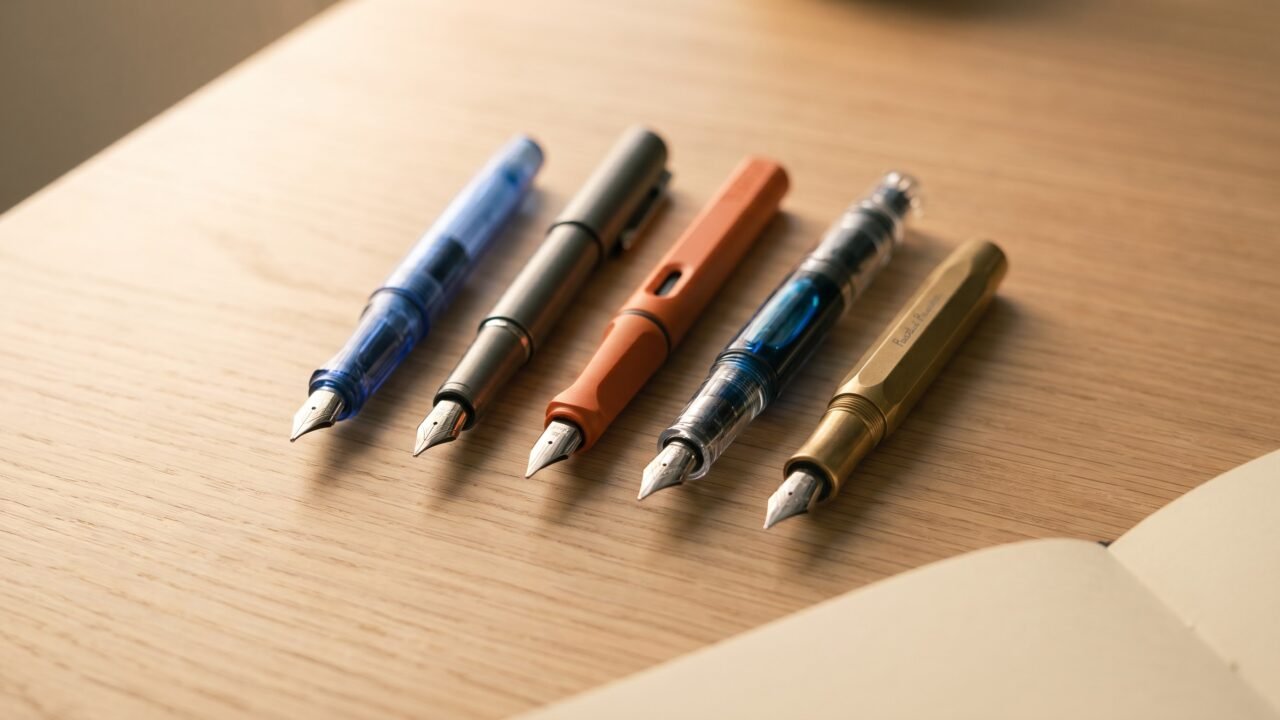
The best fountain pen for a first-time buyer is almost always the Pilot Metropolitan – metal body, reliable nib, includes a converter, costs around $22 to $28, and survives every mistake a beginner makes. But if that doesn’t fit your budget or your hand, the right pick changes. This guide walks through the strongest options from under $10 to around $30, explains what actually matters in a first pen, and flags the three regrets most beginners have six months in.
The tiered pick table: which pen at which price
The table below is the fastest way to land on a starting point. Every pen listed is ready to write with cartridge or converter ink included, tolerates beginners, and has at least one nib size under M available for smaller handwriting. Three pens share the under-$50 tier because they suit different writers; the comparison text below explains how to choose between them.
| Budget tier | Top pick | Why it wins at this price | One honest downside | Best nib to order |
|---|---|---|---|---|
| Under $10 | Platinum Preppy | Slip & Seal cap keeps nib wet up to a year; polished steel nib for $7; Japanese F writes at about 0.3mm | Plastic feels light; not the choice if you want heft | Fine (03) for most handwriting |
| Under $25 | Pilot Metropolitan | Brass body, squeeze converter included, nib is famously smooth for the price, widely stocked | Proprietary cartridge/converter system only | Fine (Japanese F ≈ Western EF) |
| Under $50 | Lamy Safari | Interchangeable Z50 nibs, ABS plastic that survives drops, huge ecosystem of accessories | Triangular grip divides opinion; some find it stiff | Fine or Medium (Western sizing) |
| Under $50 (alt) | TWSBI ECO | Piston filler holds up to 2ml of ink; clear demonstrator barrel; nib quality above its price | Piston mechanism is one more thing to learn and maintain | Fine or Medium |
| Under $50 (pocket pick) | Kaweco Sport | Pocket-sized (10.7 cm closed), German nib, decades of design refinement, posts to full size | Short unposted length is awkward for large hands | Fine or Medium (German/Western sizing) |
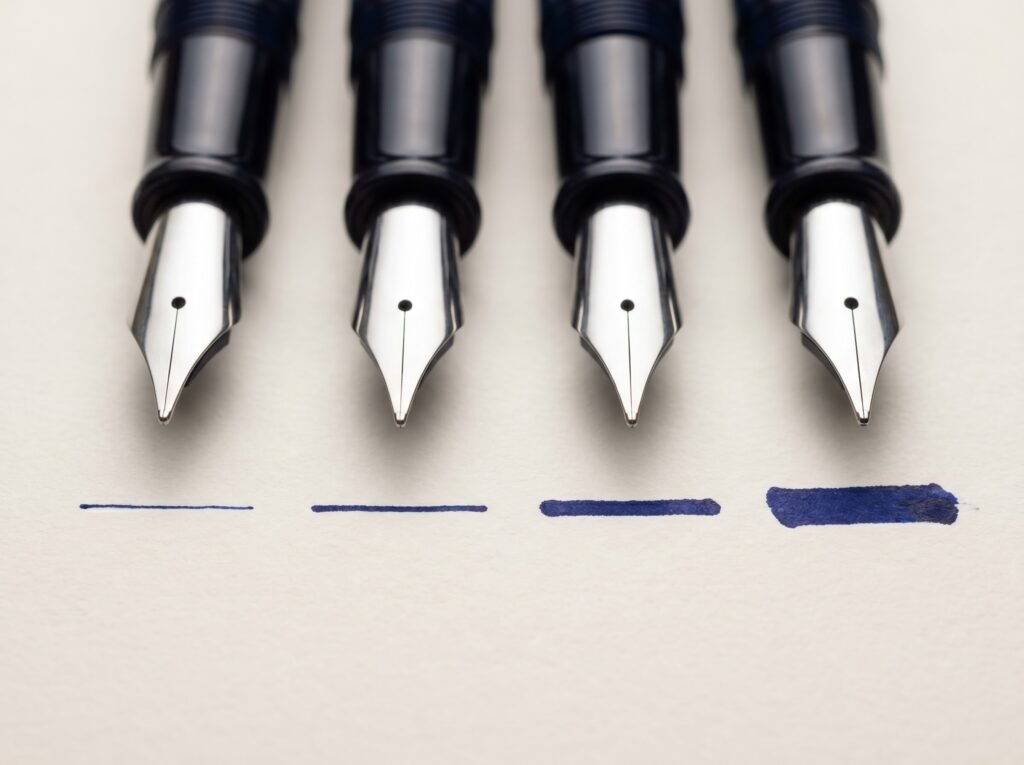
A note on sizing across brands: Japanese manufacturers (Pilot, Platinum) grade their nibs one step finer than German and Western brands. A Pilot Fine writes roughly like a Western Extra Fine; a Pilot Medium writes like a Western Fine. Our nib sizes guide has the full line-width breakdown if you want numbers.
Under $10: Platinum Preppy
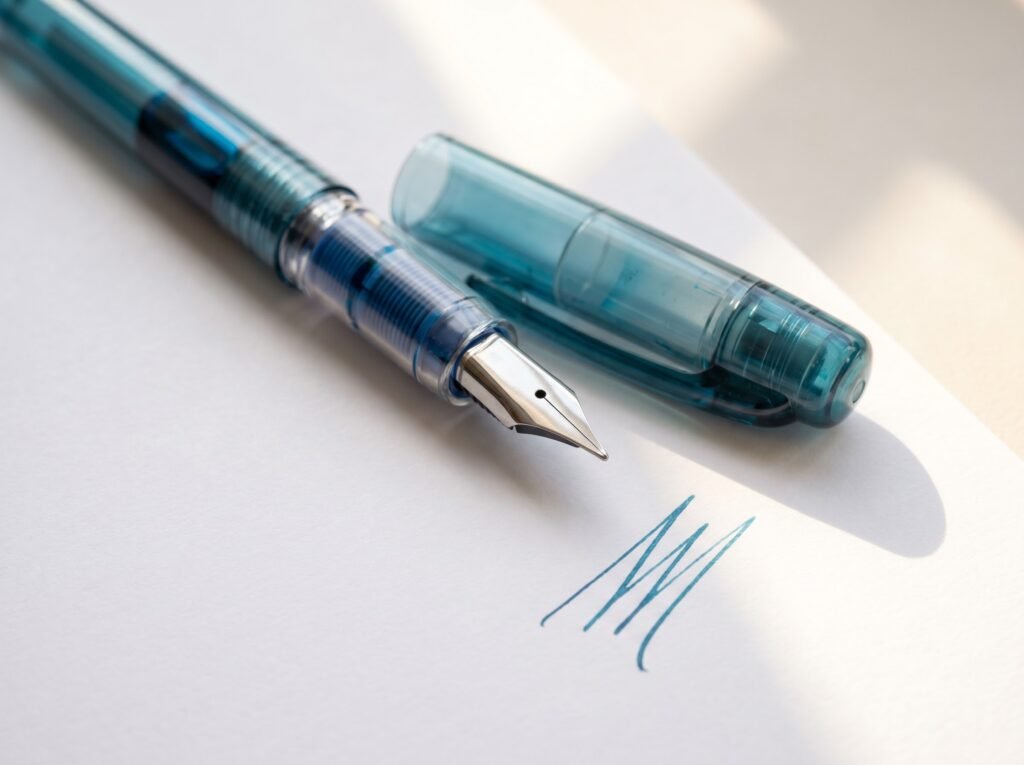
The Preppy costs about $7 and outperforms its price in two meaningful ways. First, the stainless steel nib is tipped with a hard alloy point – the same basic construction used in far more expensive Platinum pens, which keeps the nib smooth and durable for the price. Second, the Slip & Seal cap mechanism can keep the nib from drying for up to a year unused, which matters a lot for someone who picks up and sets down a pen casually.
Nib options are extra fine (0.2mm), fine (0.3mm), and medium (0.5mm), using Japanese sizing. The extra fine is unusually precise – good for small planners, tight notebook margins. The fine is the better all-round first choice for general writing.
The downside is honest: the pen is lightweight plastic, and the cap snaps rather than threads. It will feel insubstantial next to metal pens. Use it as a genuine starter pen or as a dedicated ink-tester when you want to try a new bottle without committing a more expensive pen to it. Both are valid reasons to own one at $7.
Under $25: Pilot Metropolitan (the one pen recommendation)
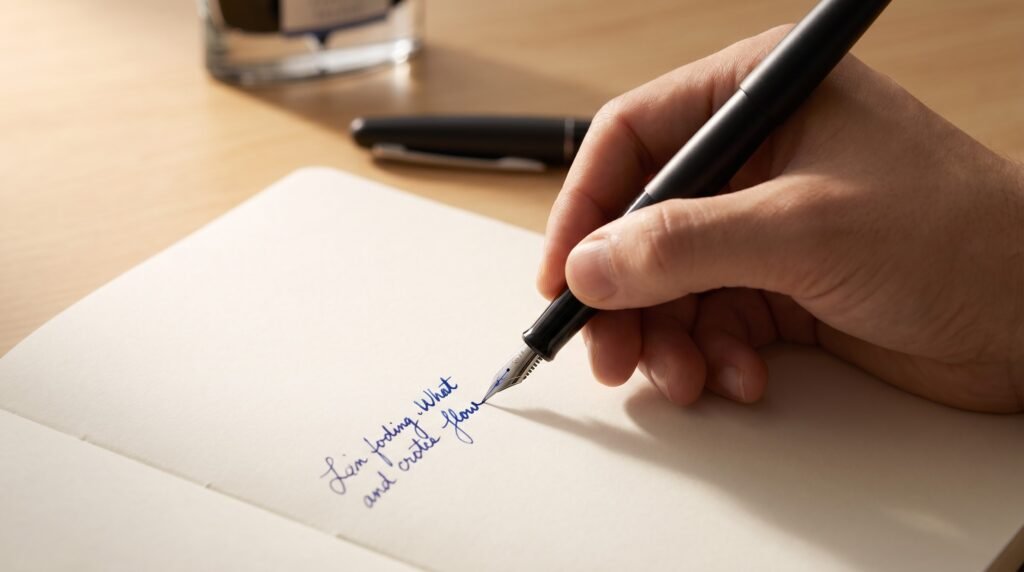
If someone asked the Nibhaven team for a single name – one pen, no budget discussion – the answer is the Metropolitan. Here’s why it keeps earning that position.
The brass body weighs 26 grams, which is enough to write with very little pressure. Fountain pens work through gravity and capillary action, not pressure, and a pen with some heft makes that easier to feel. The steel nib is tuned conservatively: it writes a little dry rather than a little wet, which means fewer bleed-through problems on average office or notebook paper. The pen ships with a squeeze converter included so you can use bottled ink right away. It comes in a gift box. At roughly $22 to $28 (street price varies), the value proposition is simply hard to beat.
Order the Fine nib. The Metropolitan is a Japanese pen, so its Fine nib writes like a Western Extra Fine – clean, precise lines that work on nearly any paper. The Medium is a pleasant writer too, but fine-line control is more useful when you’re still learning what papers you like and how you write.
One constraint worth knowing: Pilot uses a proprietary converter and cartridge system. The included squeeze converter works fine for most users; the CON-40 twist converter is also compatible if you prefer filling from the end. Standard international cartridges will not fit. That is a real limitation if you want to use a wide range of boutique inks eventually, but for a first pen, Pilot’s own ink range is large enough to keep you busy for years. The comparison between the Metropolitan, Pilot Kakuno, and TWSBI ECO is covered separately in our three-way comparison.
Under $50: Lamy Safari
The Safari costs $37 and brings three things a first pen at $22 cannot: an interchangeable nib system, a triangular grip that teaches correct pen orientation, and access to an enormous ecosystem of color variants and accessories.
The Z50 stainless steel nib snaps out and swaps in under a minute without tools. That means you can buy one Safari and try a Fine, a Medium, and a Broad nib over time without buying a whole new pen – useful once you start forming opinions about line width. Available sizes run from Extra Fine through Broad, plus a Left Hand and Beginner nib, all in Western sizing. The triangular grip section forces you to hold the pen at roughly the right angle and rotation, which speeds up the habit-forming phase of the learning curve.
The body is ABS plastic, weighs 16 grams, and will survive drops onto tile. Colors range from classic charcoal to seasonal limited editions released every year. The Safari fills by standard Lamy cartridge (T10) or the Z28 converter for bottled ink.
The one honest caveat: the triangular grip is polarizing. Writers with larger hands sometimes find it constricting, and the flat facets press differently than a round grip. Try one in a store if you can. The Lamy versus Pilot versus TWSBI question is a common second step for beginners – that comparison guide walks through the differences in detail.
Under $50 (alternative): TWSBI ECO
The ECO costs $36.99 and brings one feature no cartridge or converter pen can match: a built-in piston filler that holds up to 2ml of ink. That is roughly twice what a standard converter carries. Fill it from a bottle, cap it, write for weeks without thinking about refills.
The clear barrel (demonstrator style) means you always know how much ink remains. The nib quality for the price is excellent: the steel nib writes with slightly more feedback than the Metropolitan’s, which some people prefer and some people don’t. Available sizes are EF, F, M, B, and Stub 1.1.
The piston mechanism is also the ECO’s one learning curve. You fill directly into the barrel (no cartridge, no separate converter), and the mechanism needs occasional light maintenance. TWSBI provides a wrench and silicone grease with the pen, which is a thoughtful touch. New users who want to spend less time on pen maintenance might prefer the Safari or Metropolitan for a first pen and come to the ECO second.
One more thing to know: the ECO ships without ink, unlike the Preppy or Metropolitan. Have a bottle ready.
Under $50 (pocket pick): Kaweco Sport
The Kaweco Classic Sport costs €24.95 in Germany (roughly $27 to $30 imported, depending on the source). It sits alongside the Lamy Safari in the under-$50 tier but earns its own section because it covers a different use case: portability. The pen measures 10.7 cm closed and grows to about 13 cm with the cap posted on the back. It fits in a shirt pocket or small bag without a case.
The nib is made in Germany and comes in five sizes from Extra Fine to Extra Broad, using Western sizing. The design is octagonal, and the cap screws on and off – a secure closure that suits a pocket pen. The filling system takes standard international short cartridges, and a Mini or Sport converter is available separately for bottled ink.
For someone who wants to carry a pen daily without a dedicated pen case, the Sport is hard to argue against. Writers who spend most of their time at a desk will find the Metropolitan or TWSBI ECO more comfortable for long sessions.
What actually matters in a first fountain pen
Beginners often evaluate pens on features that matter less than they think (gold nibs, special fills, exclusive colors) and underweight what actually shapes the first six months of use.
Nib size vs. your paper. The right nib size depends heavily on what you write on. Cheap copy paper feathers with any nib; good quality notebooks handle fine nibs well. If you haven’t settled on a regular notebook yet, start with a Medium or Fine rather than an Extra Fine. Japanese brands use finer sizing – a detail worth knowing before you order. See the nib sizes guide for the complete picture.
Wet nibs vs. dry nibs. Japanese nibs (Pilot, Platinum) tend to run dry. German and Western nibs (Lamy, Kaweco) tend to run wet. Neither is better in absolute terms, but dry plus wet ink is one good pairing, and wet plus dry ink is the other. Mixing a dry nib with a dry, fast-drying ink will cause hard starts; mixing a wet German nib with a very wet ink on thin paper will cause bleed-through.
Filling system. Cartridges are the easiest start. Converters let you use bottled ink (far cheaper per milliliter, and the color selection is vastly wider). The TWSBI ECO’s built-in piston is the most convenient for heavy users once you’re comfortable with the format. None of these is wrong for a beginner; they just trade convenience against flexibility.
Common regrets – and how to avoid them
Regret 1: Ordering an extra-fine nib before knowing your paper. EF nibs scratch on cheap paper and feel unpleasant until you find compatible notebooks. Start with Fine or Medium, develop paper preferences, then go finer if you want to.
Regret 2: Using the wrong ink. Never put India ink, calligraphy ink, dip-pen ink, drawing ink, or acrylic ink in a modern fountain pen. These contain shellac, gum arabic, or acrylic binders that dry inside the feed and can permanently clog it. Use only inks labeled specifically for fountain pens. Shimmer inks (sparkle particles) are fountain-pen safe but can clog Fine and Extra Fine nibs – save shimmer for Medium or Broad nibs. Noodler’s Baystate Blue and the other Baystate inks must not be mixed with any other ink at all, including in a shared pen body: the chemistry causes a clog on contact.
Regret 3: Skipping the first flush. A brand-new pen often has a film of manufacturing oil on the nib and feed that causes sluggish starts or skipping. Before you fill a new pen with ink, run plain warm water through the nib section two or three times until the water flows clear. It takes about two minutes and prevents a lot of frustration.
Write with almost no pressure. A fountain pen delivers ink by capillary action, not by force. Pressing down scratches the nib across the paper and can splay the tines permanently. If the pen isn’t writing, the issue is almost never insufficient pressure – it’s nib angle, ink dryness, or the wrong paper. Hold the pen at roughly 40 to 55 degrees to the page and let it glide.
Vintage pens are a separate chapter entirely. If you buy a vintage pen (pre-1970s lever fill or button fill with a latex sac), the ink rules are stricter: highly acidic or high-pH iron gall inks can degrade aged rubber sacs, and any repair beyond gentle nib smoothing belongs to a nibmeister who specializes in vintage work.
Frequently asked questions
What is the single best beginner fountain pen overall?
The Pilot Metropolitan. It has a brass body that teaches proper light-pressure writing, a reliable steel nib, includes a converter for bottled ink, and costs $22 to $28. Enthusiasts widely recommend it as the most forgiving first pen at its price. Order the Fine nib for general use.
Do I need a converter, or can I just use cartridges?
Cartridges are perfectly fine, especially to start. A converter lets you use bottled ink, which is cheaper per use and available in thousands of colors. Many beginners start on cartridges and add a converter once they decide fountain pens are a long-term habit worth investing in.
How do I know if my nib size is too fine for my paper?
If lines look fuzzy or spread at the edges (feathering), the ink is soaking into the paper fibers – a sign the paper is too porous for a fine nib. Switch to a Medium nib, or switch to a smoother paper. Good quality cotton or wood-pulp notebooks designed for fountain pens solve most feathering problems.
Can I use any ink in my fountain pen?
Only inks specifically labeled for fountain pens. India ink, calligraphy ink, dip-pen ink, drawing ink, and acrylic ink contain binders (shellac, gum arabic, acrylic) that dry inside the feed and clog it. Shimmer inks are fountain-pen safe but need a Medium or larger nib to flow without clogging.
Why does my new pen skip or write dry?
The most common cause is manufacturing oil residue in the nib and feed. Flush the nib section with plain warm water two or three times before first use. If skipping persists after flushing and filling, check that the nib is seated fully, the converter or cartridge is clicked in firmly, and you’re holding the pen at 40 to 55 degrees with the nib face up.
The Nibhaven team
We write plain-English fountain pen guides. Every claim is checked against the manufacturer documentation and primary sources listed above before publishing.