Best fountain pen paper: a practical tier guide that ends feathering and bleed-through
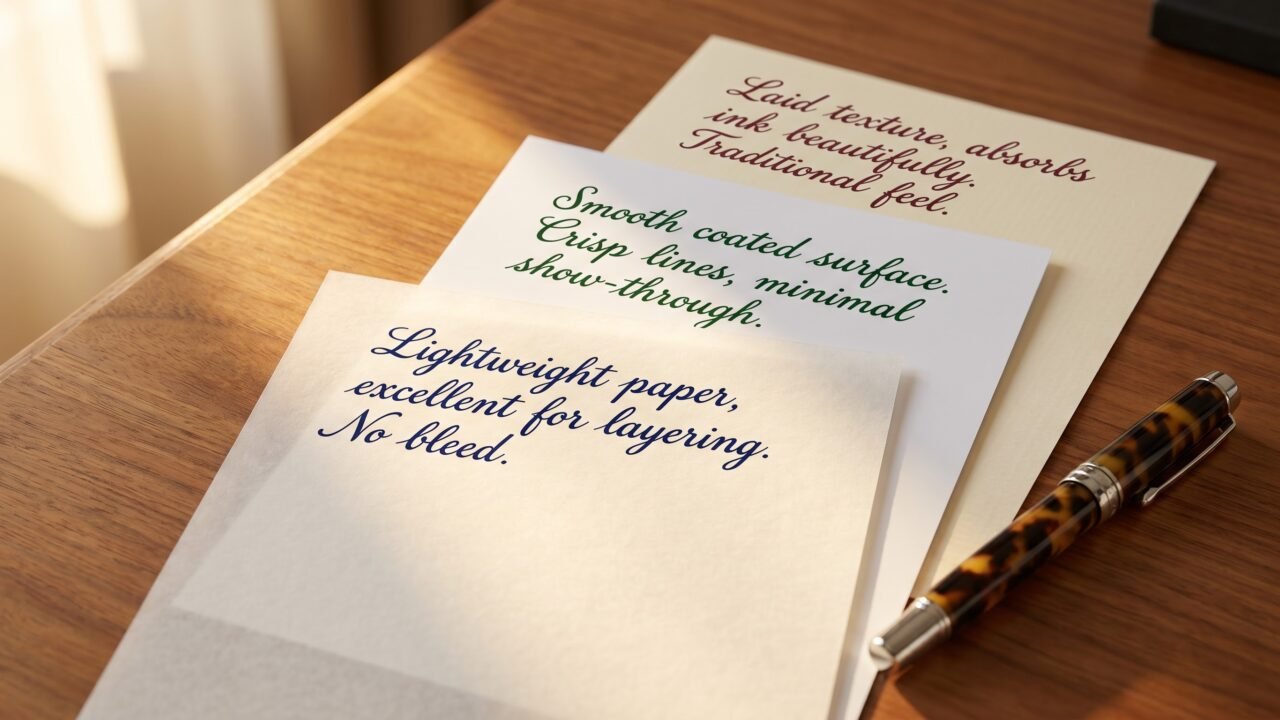
The right paper fixes feathering and bleed-through immediately. The wrong paper makes even a high-quality pen look scratchy and wet. Choosing paper for a fountain pen comes down to three things: how the sheet is sized, how heavy it is, and what its surface finish does to ink. Understand those three factors and every paper recommendation in the world clicks into place.
This guide explains how fountain-pen-friendly paper works, walks through the main tiers by performance, and ends with a decision table so you can match paper to your top priority – whether that is sheen, fast drying, sharp lines, or everyday durability.
What “fountain-pen-friendly” actually means
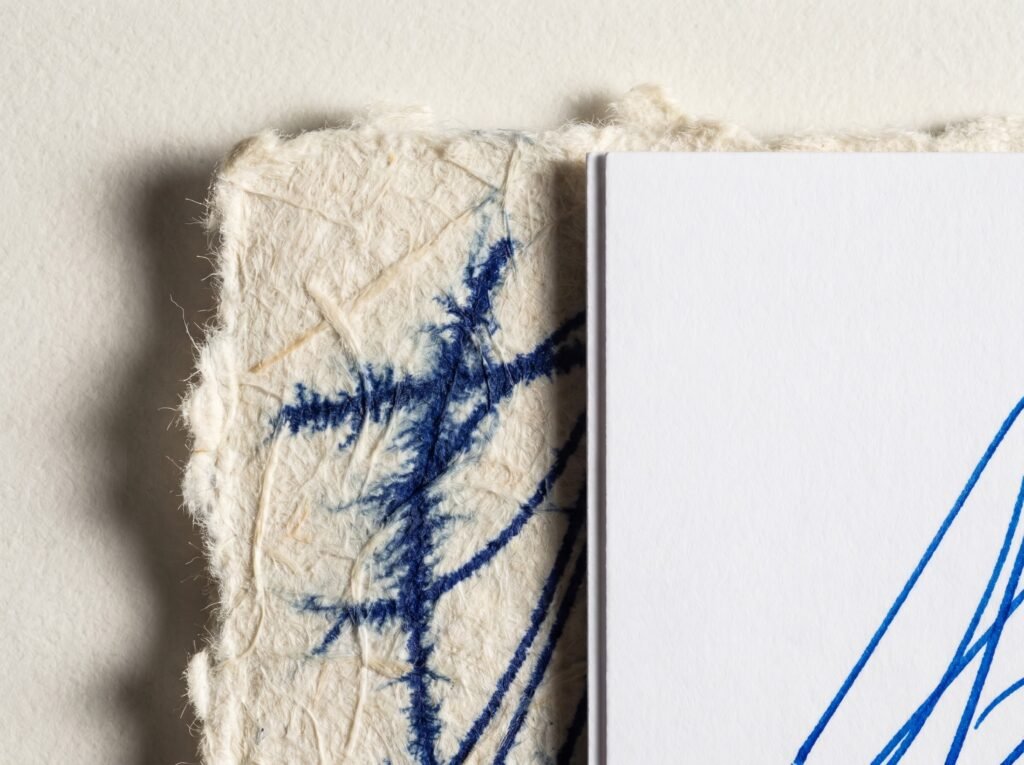
A fountain pen deposits far more liquid ink than a ballpoint. Standard copy paper, newsprint, and many spiral-bound notebooks are sized lightly or not at all, so the cellulose fibers pull ink sideways by capillary action. The result is feathering: lines that look fuzzy and branched instead of crisp. Push a little more ink through and the sheet can bleed through to the other side.
Three manufacturing properties determine how a paper handles that ink load.
Sizing
Sizing is a treatment applied during or after paper manufacture to reduce absorbency. Internally sized paper gets hydrophobic agents mixed into the pulp slurry. Surface (tub) sized paper is dipped or coated after the sheet forms. The result in both cases is a layer that slows how fast ink soaks into the fiber structure, letting ink dry at the surface rather than spreading through it.
Unsized paper, called waterleaf in the trade, is so absorbent that water-based inks spread uncontrollably. Lightly sized newsprint sits just above that. Strong surface-sized or coated writing papers keep ink at the surface, producing sharp lines, vivid color, and the conditions that allow sheen-capable inks to show their color shift. For a deep dive into what happens when a paper’s sizing fails (and why some popular notebooks are the worst possible choice), see our piece on the science of sizing and why certain notebooks fail fountain pens.
GSM (grammage)
GSM stands for grams per square metre, the standard measure under ISO 536. An A0 sheet of 80 gsm paper weighs exactly 80 grams. Standard copy paper runs 70-80 gsm. Premium writing paper starts around 90 gsm. A heavier sheet resists bleed-through because there is simply more fiber to absorb before ink reaches the other side.
Weight and sizing work differently on different problems. Sizing and coating prevent feathering. Weight and density prevent bleed-through. A thin paper with strong coating (Tomoe River at 52 gsm) can outperform a thick uncoated sheet on feathering, while losing badly on bleed-through with very wet inks. Our full paper thickness and GSM guide covers how to read gsm numbers in practice.
Surface finish
Hot-pressed and calendered papers pass through heated rollers that compress and smooth the surface, reducing porosity. The result is a near-slick feel that lets nibs glide easily and ink sit at the very top of the sheet. Rougher, less calendered surfaces give more feedback (the slight tooth under the nib) but absorb ink faster, which speeds drying and reduces sheen.
Coated papers add a mineral or polymer layer on top of the fiber base. Micro-coated papers like Cosmo Air Light use an extremely thin coating that preserves a natural feel while dramatically improving ink behavior. Heavy gloss coatings work the opposite way: ink beads and skips unless the nib is wet enough to overcome surface tension.
The paper tier guide
The table below groups papers by performance tier. “Sheen” means how well the paper supports color-shifting reflective ink behavior. “Fast dry” means suitable for left-handed or quick writers. “Daily use” means the format is practical for everyday journaling or note-taking. Details on each paper follow.
| Tier | Paper | GSM | No feather | No bleed | Sheen | Fast dry | Daily use |
|---|---|---|---|---|---|---|---|
| Premium | Tomoe River S (Sanzen) 52 gsm | 52 | Excellent | Good* | Best | Slow | Moderate |
| Premium | Cosmo Air Light 83 gsm | 83 | Excellent | Excellent | Excellent | Slow | Good |
| Premium | Midori MD Paper Cream | ~72 | Very good | Very good | Good | Medium | Good |
| Workhorse | Clairefontaine (90 gsm vellum) | 90 | Excellent | Excellent | Very good | Slow | Very good |
| Workhorse | Rhodia (80 gsm) | 80 | Excellent | Excellent | Good | Medium | Very good |
| Workhorse | Leuchtturm1917 (80 gsm) | 80 | Very good | Good | Good | Medium | Very good |
| Entry | Oxford Campus Optik 90 gsm | 90 | Good | Good | Moderate | Medium | Excellent |
| Avoid | Standard copy paper (70-80 gsm uncoated) | 70-80 | Poor | Poor | None | Fast | Poor |
* Tomoe River 52 gsm resists bleed-through well under normal use but shows more ghosting and bleed with very wet nibs or broad strokes than heavier options.
Premium tier: the papers fountain pen enthusiasts obsess over
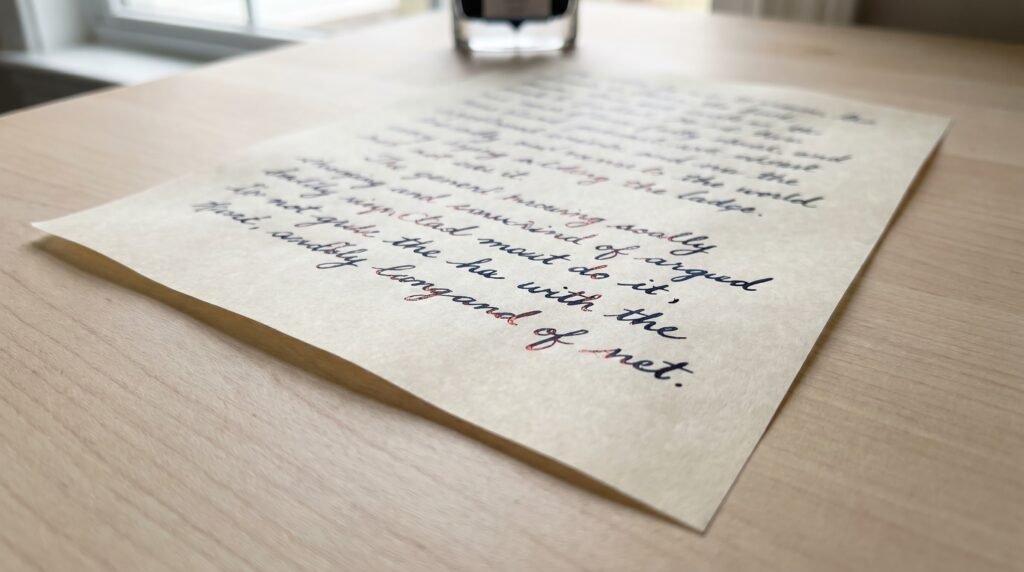
Tomoe River S (Sanzen) – 52 gsm
Tomoe River is the paper most associated with fountain pen sheen. Originally manufactured by Tomoegawa, production later moved to Sanzen Paper Manufacturing, which makes the current “Tomoe River S” stock. At 52 grams per square metre it is remarkably thin; notebooks holding 300 or more sheets stay portable. The trick is a double-sided coating that keeps ink at the surface despite the paper’s low weight.
That surface is the reason this paper shows sheen better than anything else widely available. Sheen appears when a concentrated dye layer dries on top of a non-absorbent surface instead of soaking in. Tomoe River’s low absorbency lets that dye pool stay concentrated as water evaporates, producing the green-to-red or blue-to-pink shifts that enthusiasts photograph. The tradeoff is slow drying: wet inks can smear for 30 seconds or more, and shimmer inks with mica particles are especially slow to set – place a spare sheet under your writing hand to avoid dragging wet ink across the page.
The current Sanzen version is reported by the fountain pen community to be slightly thicker than the original Tomoegawa stock, with improved durability and marginally faster drying. For the full history and the 52 vs 68 gsm comparison, see our dedicated Tomoe River guide.
Cosmo Air Light – 83 gsm
Cosmo Air Light comes from Nippon Paper in Japan and is distributed in sampler pads by Yamamoto Paper. It is classified as micro-coated high-bulk paper, meaning a very thin coating sits over a paper body engineered to be less dense than its thickness suggests. The 83 gsm standard is 111 +/- 3 microns thick – roughly 20% lighter than a standard matte coated sheet at the same thickness, so the notebook feels thicker and more substantial than its weight suggests.
The micro-coating handles sheen nearly as well as Tomoe River while delivering better resistance to bleed-through, because the base paper is heavier. Writers who want sheen performance without Tomoe River’s ghosting consider this the stronger all-rounder. Dry time is still slow.
Midori MD Paper – hardwood pulp and cotton variants
Midori’s MD Paper line is made in Japan from hardwood pulp, which produces shorter fibers and a naturally smoother surface than conifer-based paper. The brand describes the standard cream variant as having the right balance between smoothness and a slight resistance: a little tooth that makes writing feel deliberate rather than slippery.
The MD Paper Cotton variant, introduced in 2013, uses 20% cotton pulp. Cotton fibers are longer and narrower than wood pulp fibers, adding a softer feel. Midori describes the cotton paper as especially good for fountain pens and colored pencils. Neither variant has the ultra-low absorbency of Tomoe River, so sheen is present but more subtle. Drying is moderate. Both are genuinely pleasant for long writing sessions.
Workhorse tier: reliable, practical, widely available
Clairefontaine – 90 gsm vellum
Clairefontaine paper is made in France. The 90 gsm vellum stock used across its notebooks and pads is ultra-smooth, acid-free, and pH neutral. The surface coating keeps lines sharp with no feathering and no bleed-through under ordinary use. Color saturation is excellent because ink sits at the surface rather than sinking.
The same properties that make sheen possible also slow drying. Left-handed writers and people who write quickly may find Clairefontaine frustrating without a blotter or a change to a drier ink. It is the right call for fountain pen-first writers who do not need fast turnaround.
Rhodia – 80 gsm
Rhodia has been part of the Clairefontaine group since 1997 and shares manufacturing in France, but the 80 gsm paper is a distinct product. It is slightly more absorbent than Clairefontaine’s 90 gsm vellum, which translates to marginally faster drying and slightly more modest sheen performance, while still earning full marks for feathering and bleed-through resistance. The Rhodia Webnotebook uses a smoother paper that is closer to Clairefontaine in feel.
Rhodia’s 80 gsm pads are the go-to recommendation for left-handed fountain pen writers who want real paper quality without the slow-drying frustration. The combination of adequate sizing and slightly higher absorbency hits a practical balance.
Leuchtturm1917 – 80 gsm acid-free
Leuchtturm1917 uses FSC-certified 80 gsm acid-free paper in most of its standard notebooks. Performance for feathering and light bleed-through is solid. The surface is slightly more textured than Rhodia or Clairefontaine, which many writers enjoy as feedback. The known limitation is ghosting: ink shows through faintly on the reverse side of thin 80 gsm sheets, making double-sided use uncomfortable with wet inks or broad nibs. Leuchtturm1917’s premium notebooks (some lines use 100 gsm or heavier stock) largely eliminate ghosting.
Leuchtturm1917 is a good choice when the notebook’s organizational features (numbered pages, table of contents pages, pre-labeled tabs) matter as much as the paper. For a head-to-head comparison with Rhodia, see our Rhodia vs Leuchtturm guide.
Property tradeoffs: the decision table
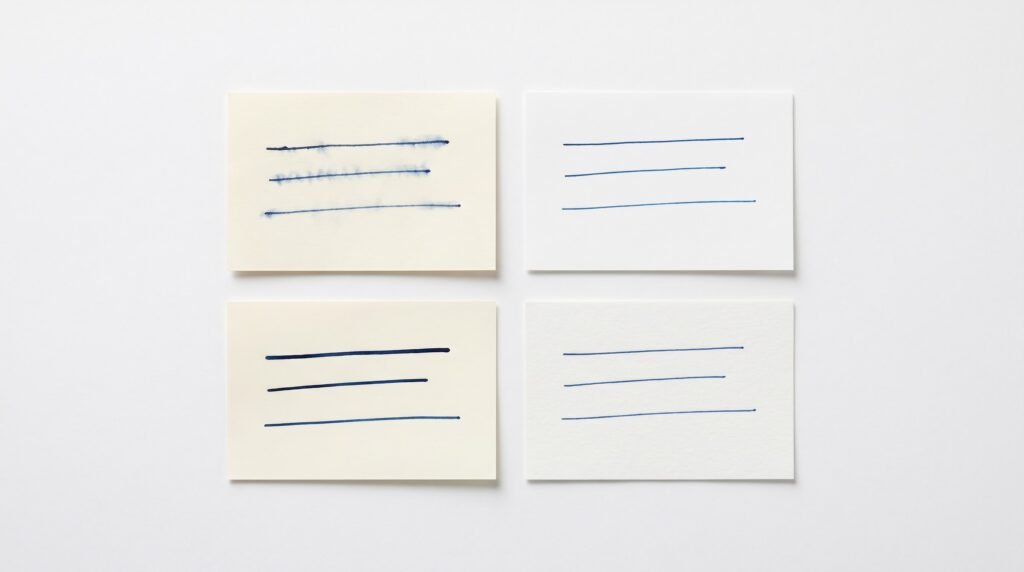
Most paper frustration comes from mismatched priorities. This table maps specific needs to specific paper choices.
| What you want most | Best paper choice | Why it works | What you give up |
|---|---|---|---|
| Maximum sheen from sheening inks | Tomoe River 52 gsm | Ultra-low absorbency lets dye concentrate at surface | Slow drying, some ghosting with wet inks |
| Sheen with better durability | Cosmo Air Light 83 gsm | Micro-coating nearly matches TR sheen; heavier base resists bleed | Still slow to dry; less common in notebooks |
| Zero feathering, zero bleed, daily journaling | Clairefontaine 90 gsm | Strong surface sizing, consistent manufacturing | Slow drying |
| Left-handed or fast writer | Rhodia 80 gsm | Slightly more absorbent than Clairefontaine; dries faster | Modest sheen compared to TR or Cosmo |
| Natural feel with some texture | Midori MD Paper Cream | Hardwood pulp gives light feedback; fountain-pen-optimized sizing | Sheen is subtle |
| Shimmer ink compatibility | Rhodia 80 gsm or Clairefontaine 90 gsm; medium or broad nib | Smooth enough for mica particles to show; wide enough channel to keep flowing | Particles can clog fine nibs regardless of paper choice |
| Budget daily notebook | Oxford Campus Optik 90 gsm | Widely available; genuine 90 gsm resists feathering adequately | Less vibrant color; modest sheen |
| Archival writing (documents, letters) | Acid-free options: Clairefontaine, Rhodia, Leuchtturm1917 | pH-neutral paper (pH 7.0-9.0) prevents fiber degradation; combine with archival ink | Cost; acid-free does not prevent ink fading without archival ink too |
How the sheen/fast-dry tradeoff works
The hardest tradeoff in fountain pen paper is the one between sheen and dry time. Both come from the same property.
Sheen requires a non-absorbent surface. When ink pools rather than soaking in, the dye concentration at the top of the dried ink layer is high enough to produce a thin reflective film. Tomoe River and Cosmo Air Light are sheen-capable precisely because they slow absorption to a crawl. That same property means liquid ink sits wet on the surface for much longer, sometimes well over 30 seconds with a wet nib.
Faster-drying papers are more absorbent. Ink sinks into the fiber quickly, which moves moisture away from the surface but also pulls dye deeper into the sheet. Sheen cannot form because the dye never concentrates at the top. Rhodia 80 gsm is faster than Clairefontaine 90 gsm for exactly this reason: the slightly higher absorbency accelerates drying at the cost of some sheen potential.
There is no paper that maximizes both. Writers who need speed (lefties, fast note-takers, people using wet Japanese broad nibs) should pair drier inks with moderately absorbent paper. Writers who want to photograph sheen should plan for slow drying and write with a loose wrist that never drags back over fresh lines. Our article on shading, sheen, and shimmer explained covers what makes a specific ink sheen-capable in the first place.
One more variable: nib wetness interacts with paper absorbency directly. A dry Japanese fine nib on Tomoe River will produce sharp, slow-to-dry lines. The same nib on Rhodia will produce sharp, faster-drying lines. A wet German broad nib on Rhodia is manageable. That same nib on Tomoe River can bleed through with saturated inks. The pairing rule – wet nib with a drier ink, or dry nib with a wetter ink – exists partly to manage exactly this dynamic. Paper is the third element in that combination, and matching all three gives the best results.
What to actually buy first
If you have a fountain pen and have never tried proper paper, start with a Rhodia pad. An A5 or A4 dot pad is widely available online and in stationery shops, fits in any bag, and will show you immediately how different fountain pen paper performs compared to a copy paper notebook. You will see cleaner lines, more accurate color, and sharper edges from the same pen and ink you already own.
After that, the tier table above guides the next step. If you want sheen, try Tomoe River loose sheets before committing to a notebook; loose sheets let you test performance without expense. If you want a daily journal, Clairefontaine or a Rhodia Webnotebook is the right move. If you write fast or are left-handed, Rhodia pads over Clairefontaine.
The longer-form decisions (which notebook formats work best, how paper choice interacts with specific ink brands, and which notebooks hold Tomoe River paper) are covered in our best fountain pen notebooks guide, our detailed paper tier guide, and the full explainer on fixing feathering and bleed-through.
Frequently asked questions
Does paper weight alone prevent feathering?
Weight (gsm) mainly prevents bleed-through by giving ink more fiber to absorb before reaching the back of the sheet. Feathering is a surface problem caused by unsized or lightly sized fibers pulling ink sideways. A heavy but unsized paper still feathers badly. You need both adequate weight and strong sizing or coating to solve both problems.
Can I use shimmer inks on any fountain pen paper?
Yes, but paper choice is secondary to nib choice with shimmer inks. The mica particles in shimmer inks can clog fine and extra-fine nibs regardless of paper quality. Use a medium or broader nib. On the paper side, smooth options like Rhodia or Clairefontaine let the shimmer show clearly. See our shimmer ink safety guide for full nib-and-paper recommendations.
Why does my ink look more vivid on some papers?
Paper that keeps ink at the surface (low absorbency, strong sizing or coating) shows more color saturation than paper that lets ink sink into the fibers. The dye stays concentrated near the top where light hits it. The same ink on copy paper looks duller because the dye disperses through the fiber depth. Acid-free, pH-neutral paper also preserves color better over time than acidic paper.
Is acid-free paper necessary for fountain pens?
Not for everyday use, but it matters for anything you want to keep long-term. Acidic paper degrades over decades, yellowing and becoming brittle. Acid-free paper at pH 7.0-9.0 is stable. Most premium fountain pen papers (Clairefontaine, Rhodia, Leuchtturm1917) are already acid-free. Pair acid-free paper with a permanent or archival ink for documents you want to preserve.
The Nibhaven team
We write plain-English fountain pen guides. Every claim is checked against the manufacturer documentation and primary sources listed above before publishing.